
Niacinamide vs Vitamin C: The Compatibility Myth, Finally Settled
The “don’t mix niacinamide and vitamin C” rule has been circulating in skincare communities for years. You’ve probably encountered it, probably adjusted your routine around it, and possibly spent time separating products into elaborate morning-and-evening sequences to keep the two apart. Here’s the part most articles don’t lead with: the evidence that originally drove that rule has not held up.
The current dermatology position is that these two ingredients can be used together. The chemistry concern that started the myth requires conditions – sustained temperatures around 100 degrees Celsius – that don’t exist on human skin. This is worth knowing before you build a more complicated routine than you actually need.
Key Takeaways
– Niacinamide is effective at 2-5% concentration for pore appearance, sebum regulation, and skin barrier support, per NIH-published research (PMC8389214).
– The nicotinic acid flushing concern when combining niacinamide and vitamin C requires temperatures around 100°C – not achievable in skincare or on skin surface conditions.
– Both ingredients address skin health from different angles and their effects are complementary, not competing.
What Does Niacinamide Actually Do for Your Skin?
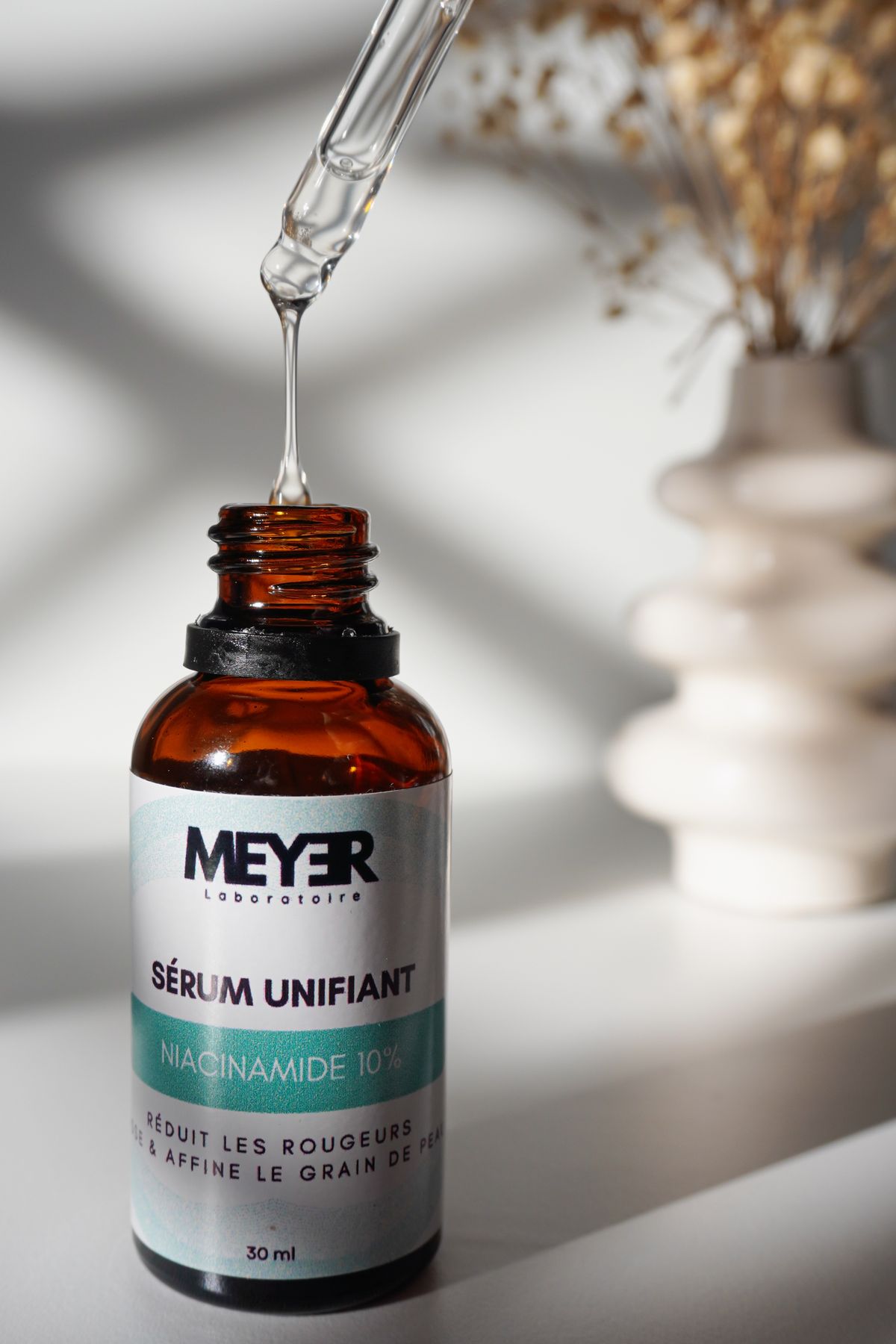
Niacinamide is a form of vitamin B3, and it’s become one of the most evidence-backed and widely used ingredients in skincare over the past decade. The reason it’s popular isn’t hype – it’s that it does several genuinely useful things simultaneously and is unusually well tolerated by most skin types, including sensitive and acne-prone.
Research published in PMC on niacinamide’s mechanistic basis and clinical evidence (PMC8389214) confirms niacinamide’s effects on skin aging, pigmentation, and barrier function. At concentrations of 2-5%, clinical studies show improvements in skin barrier integrity (measured by reduced transepidermal water loss), reduced sebum production in oily skin, visibly reduced redness and blotchiness, and modest improvements in the appearance of pores over consistent use. It also inhibits the transfer of melanin to the skin’s surface, contributing a brightening effect through a different mechanism than vitamin C.
This is one of those ingredients where the science genuinely matches the marketing – which is more unusual than it should be in skincare.
What Does Vitamin C Do, and Why Does It Interact with pH?
Vitamin C as L-ascorbic acid – its most active and studied form – is an antioxidant that neutralises free radicals, supports collagen synthesis, and inhibits tyrosinase to fade hyperpigmentation over time. These effects are well-documented. The PMC5605218 review covers the mechanism and clinical evidence in detail.
The complication with vitamin C is chemical. L-ascorbic acid requires a low pH environment – around 3 to 3.5 – to stay stable in formula and to penetrate the skin effectively. That level of acidity is also what makes some people’s skin sting when they first use it, particularly at higher concentrations. And it’s the root of the compatibility concern with niacinamide: the two have different pH preferences, and niacinamide functions best in a more neutral environment (pH 5-7).
This pH difference is real. What was never as solid as the internet made it sound was the conclusion that it rendered them incompatible.
Where Did the “Don’t Mix Them” Rule Actually Come From?
The concern has a specific, traceable origin. When L-ascorbic acid and niacinamide are combined, they can theoretically react to form nicotinic acid – a related B3 compound that causes skin flushing in some people. This was documented in research, but under controlled lab conditions involving temperatures of approximately 100 degrees Celsius sustained for a meaningful period.
Your skin surface temperature is around 33 degrees Celsius. The products you apply to it do not approach boiling point. The reaction does occur at room temperature – but so slowly that the amount of nicotinic acid produced in a typical skincare application is clinically insignificant. No documented cases of this reaction causing flushing through normal skincare use have emerged in the literature.
The concern travelled from a lab observation to skincare forums, got amplified by brands that had a commercial interest in keeping their ingredients in separate products (separate products equals separate sales), and became received wisdom before anyone properly interrogated whether the real-world conditions matched the lab conditions. They don’t.
What Does Current Evidence Say About Using Both Together?
Dermatology consensus has moved. Multiple dermatologists and cosmetic chemists, reviewing the available evidence in recent years, have concluded that combining niacinamide and vitamin C in a skincare routine is safe and does not meaningfully cancel either ingredient’s effects. Coverage at Healthline, reviewed by dermatologists, reaches the same conclusion.
The residual practical consideration is the pH difference. If you apply L-ascorbic acid serum immediately followed by a niacinamide product, the niacinamide product may slightly raise the pH of your vitamin C before it fully penetrates. This could modestly reduce L-ascorbic acid’s efficacy – not because of any dangerous reaction, but because you’ve changed its chemical environment mid-process. This is a real but minor consideration, and the solution is simple: wait five to ten minutes between applications.
That’s it. A few minutes of wait time, not a complete routine overhaul.
What Does Each Ingredient Do That the Other Doesn’t?
Both address brightening and hyperpigmentation, but they do it through different mechanisms – and the difference matters for choosing priorities.
Vitamin C inhibits tyrosinase directly, slowing melanin production at the source. It also provides antioxidant protection that prevents new UV-triggered pigmentation from forming. For existing hyperpigmentation – sun spots, post-acne marks, melasma – vitamin C is the stronger targeted tool, with more clinical evidence behind it for fading established pigmentation.
Niacinamide takes a different route: it inhibits the transfer of melanin pigment from the cells that produce it (melanocytes) to the surface skin cells. It doesn’t slow melanin production as directly as vitamin C, but it also addresses concerns vitamin C doesn’t touch: sebum regulation, barrier reinforcement, redness reduction, and pore appearance. For oily or acne-prone skin, for reactive or sensitive skin, for barrier-compromised skin that can’t yet tolerate the acidity of L-ascorbic acid, niacinamide is often the better starting point.
Which Skin Types Suit Each Ingredient Best?
Niacinamide suits: oily and acne-prone skin (sebum regulation, pore appearance), sensitive and reactive skin (anti-inflammatory, barrier support), skin that’s new to actives (well-tolerated, low irritation risk), and anyone dealing with redness or uneven skin tone. At 2-5%, it’s one of the most accessible active ingredients for beginners.
Vitamin C suits: skin dealing with existing hyperpigmentation (its strongest evidence), skin exposed to significant UV or pollution (antioxidant protection), and skin that’s already established a solid barrier foundation. Because L-ascorbic acid works best at a low pH and can irritate compromised skin, it tends to suit people who’ve already been using skincare consistently for a while.
For most people who’ve been using skincare for a few months and have a stable barrier, both ingredients are worth using. Their effects are additive, not redundant.
How Do You Actually Layer Both in a Routine?
Two approaches work well in practice.
Different times of day. Vitamin C in the morning – this is its natural home, since you’re applying an antioxidant before UV and pollution exposure. Niacinamide in the evening, or in any daytime moisturiser or sunscreen that already contains it. This approach eliminates any pH interaction concern entirely and is the simplest structure. Many people use this and find it works well.
Same routine, with a gap. Apply your vitamin C serum first, let it absorb for five to ten minutes, then apply your niacinamide-containing product. This gives the L-ascorbic acid time to penetrate at its preferred pH before you layer anything on top. You don’t need to set a timer – go brush your teeth, make tea, whatever. Five minutes is enough.
What to avoid: applying them at the same time as a blend, or using combination products that claim to contain both at full active concentrations. Well-formulated combined products do exist, but products that market full-strength L-ascorbic acid and niacinamide in a single formula are usually stabilising the vitamin C at a higher pH to make it compatible, which reduces its efficacy. If you want both to perform properly, separate products give you more control.
What If You Can Only Use One Right Now?
If you’re new to actives and want to start with one, niacinamide is the easier entry point. It works at a neutral pH, plays well with almost every other ingredient, and is unlikely to cause irritation at the recommended 2-5% concentration. It addresses barrier health and sebum regulation, which creates a more stable skin environment for introducing vitamin C later.
If you already have a stable routine and your main concern is hyperpigmentation or antioxidant protection, vitamin C is the more targeted tool for those goals. The UPMC Health information on vitamin C skin benefits provides a solid overview of its documented applications.
The good news is that for most people with an established routine, you don’t have to choose. Both are worth using, the evidence supports both, and the “don’t mix” rule that kept people from using them together has turned out to be based on chemistry conditions that don’t apply to skincare.
FAQ
Can niacinamide and vitamin C really be used together without any issue?
According to current dermatology consensus, yes. The concern about nicotinic acid production requires temperatures around 100°C – not conditions present on skin or in cosmetic products. A practical tip: apply vitamin C serum first and wait five to ten minutes before applying your niacinamide product. This avoids any modest pH interference and lets both ingredients work properly.
Which is better for fading dark spots – niacinamide or vitamin C?
For existing hyperpigmentation (sun spots, post-acne marks, melasma), vitamin C has stronger clinical evidence. It inhibits tyrosinase directly, slowing melanin production at the source. Niacinamide helps too, by inhibiting melanin transfer to surface cells, but vitamin C is the more targeted tool for fading established pigmentation. Both NIH PMC8389214 and PMC5605218 confirm each ingredient’s respective brightening mechanism.
At what percentage is niacinamide most effective?
Clinical studies show meaningful results at 2-5%. This is the concentration range confirmed in PMC research on niacinamide’s mechanisms and clinical evidence for reducing sebum, improving pore appearance, and supporting barrier function. Products advertising 10%+ niacinamide are not necessarily twice as effective – higher concentrations don’t consistently produce proportionally better results and may occasionally cause flushing in sensitive skin.
What if I’m sensitive to vitamin C – should I skip it entirely?
Not necessarily. If L-ascorbic acid causes stinging, start with a lower concentration (10%) and build up slowly. Alternatively, use a vitamin C derivative like ascorbyl glucoside or sodium ascorbyl phosphate, which function at a higher pH and are considerably gentler. Some people find that using niacinamide for a few months first – which strengthens the skin barrier – allows them to introduce L-ascorbic acid later without the sensitivity they had initially.
Does it matter whether I use niacinamide as a standalone serum or in a moisturiser?
Both deliver the ingredient, but a dedicated niacinamide serum gives you more control over concentration and lets you layer it intentionally within your routine. Niacinamide in a moisturiser is convenient and still beneficial, particularly for barrier support. If your primary concern is pore appearance or sebum regulation, a standalone serum at 4-5% is likely to produce more noticeable results than a moisturiser where niacinamide is one of many ingredients.
Comments are closed.