
Glass Skin Routine: What Actually Works (and What’s Just Aesthetic Content)
Glass skin has been trending for long enough now that we can actually evaluate it. Not the aspirational before-and-after version on social media – the real version: what the routine involves, which ingredients do the documented work, and what you can realistically expect from six weeks of consistent layered hydration.
The concept is legitimate. The routine behind it is genuinely good skincare. And some of what gets sold as “glass skin essentials” is filler product with strong packaging. Here’s how to tell the difference.
Key Takeaways
– Ceramides make up approximately 50% of the skin’s lipid barrier, according to research on stratum corneum lipid composition – making ceramide-containing products central to the glass skin look, not optional extras.
– Hyaluronic acid is a proven humectant, though the common marketing claim that it “holds 1,000 times its weight in water” is disputed by a 2023 ChemRxiv analysis – the real water-binding capacity is meaningful but considerably more modest.
– Barrier disruption increases transepidermal water loss (TEWL), which directly opposes the glass skin look – double cleansing and avoiding over-exfoliation matter as much as what you apply.

What Is Glass Skin, Really?
Glass skin is a Korean beauty concept that describes skin which looks clear, smooth, and almost translucent – the visual equivalent of polished glass. It’s not about shine in the greasy sense. It’s the kind of glow that comes from skin that’s consistently well-hydrated, barrier-intact, and healthy at the structural level. The texture reference – smooth enough to look like glass – is about the absence of rough patches, flakiness, and congestion as much as it is about luminosity.
The routine behind it sits within the broader K-beauty philosophy: prioritise long-term skin health over short-term fixes, use gentle products, build hydration through lightweight layered steps rather than one heavy cream. This approach has influenced global skincare significantly over the past decade, and for good reason. The emphasis on barrier health is well-supported by dermatology research, not just aesthetic preference.
What it isn’t: a magic filter. The poreless, lit-from-within images in glass skin content are also a product of professional lighting, editing, and – frequently – genetics. Pore size is largely inherited. You can improve the appearance of your skin significantly. You cannot make yourself have different-sized follicles.
Does Skin Barrier Health Actually Affect the Glass Skin Look?
Yes, directly. Barrier disruption – from over-cleansing, harsh exfoliants, or stripping products – increases transepidermal water loss (TEWL). That means your skin loses water to the environment faster than it can retain it, resulting in dryness, dullness, and uneven texture. That is the opposite of glass skin. You can layer as many hydrating serums as you like, but if your barrier is compromised, you’re filling a leaky bucket.
This is why glass skin routines prioritise gentle cleansing and barrier-supportive ingredients over high-percentage actives. Research on stratum corneum lipid composition shows that ceramides make up approximately 50% of the skin’s lipid barrier – and that when ceramide levels drop, barrier function drops with them. Topical ceramides help restore what disruption depletes, which is why they appear in so many good glass skin formulas.
What Are the Actual Steps in a Glass Skin Routine?
The routine is multi-step by design, because the layering is how the hydration builds. But each step is lightweight, and once it becomes habitual, it takes less time than you’d expect.
Double cleanse (evening only). An oil-based cleanser first – oil or balm – breaks down sunscreen, makeup, and sebum. A water-based or low-pH gel cleanser follows to remove what remains. This leaves your skin genuinely clean without the stripping that a single harsh cleanser can cause. In the morning, a rinse with lukewarm water or a very light cleanse is usually enough. Over-cleansing is one of the most common ways people accidentally sabotage their skin barrier.
Hydrating toner. Not the astringent, alcohol-heavy toners of the nineties, which did nothing useful for anyone’s skin. K-beauty toners are lightweight layers of water-based hydration – often containing humectants like glycerin, soothing ingredients like centella asiatica, and fermented actives. Their job is to prep your skin to absorb the steps that follow. Apply by patting into the skin rather than wiping – it’s gentler on a barrier you’re actively trying to support.
Essence (optional but useful). The essence sits between toner and serum in texture and concentration. It adds another hydration layer and often delivers fermented actives. It’s the step that confuses people new to K-beauty – and it’s also the one you can skip if budget or simplicity is a consideration. A good toner followed directly by a serum covers most of what an essence adds. But if you’re building the full routine, an essence is what gives the layering its characteristic depth.
Serum. For glass skin, the targeted ingredients here are hyaluronic acid, niacinamide, and centella asiatica. Vitamin C works well as a morning serum for the brightening contribution it makes to luminosity over time.
Moisturiser. Even with multiple hydrating layers underneath, moisturiser is necessary. Its job is to seal in everything you’ve applied and prevent TEWL. For glass skin, a lighter gel or gel-cream formula is usually better than a thick cream – you want barrier function without the heavy finish that reads as greasy rather than glowy.
SPF (morning). Non-negotiable. Korean and Japanese sunscreen formulas are worth knowing about if you’ve avoided SPF because of texture – they tend to have elegant, lightweight finishes that sit well under makeup without white cast.
Which Ingredients Actually Deliver the Glass Skin Look?
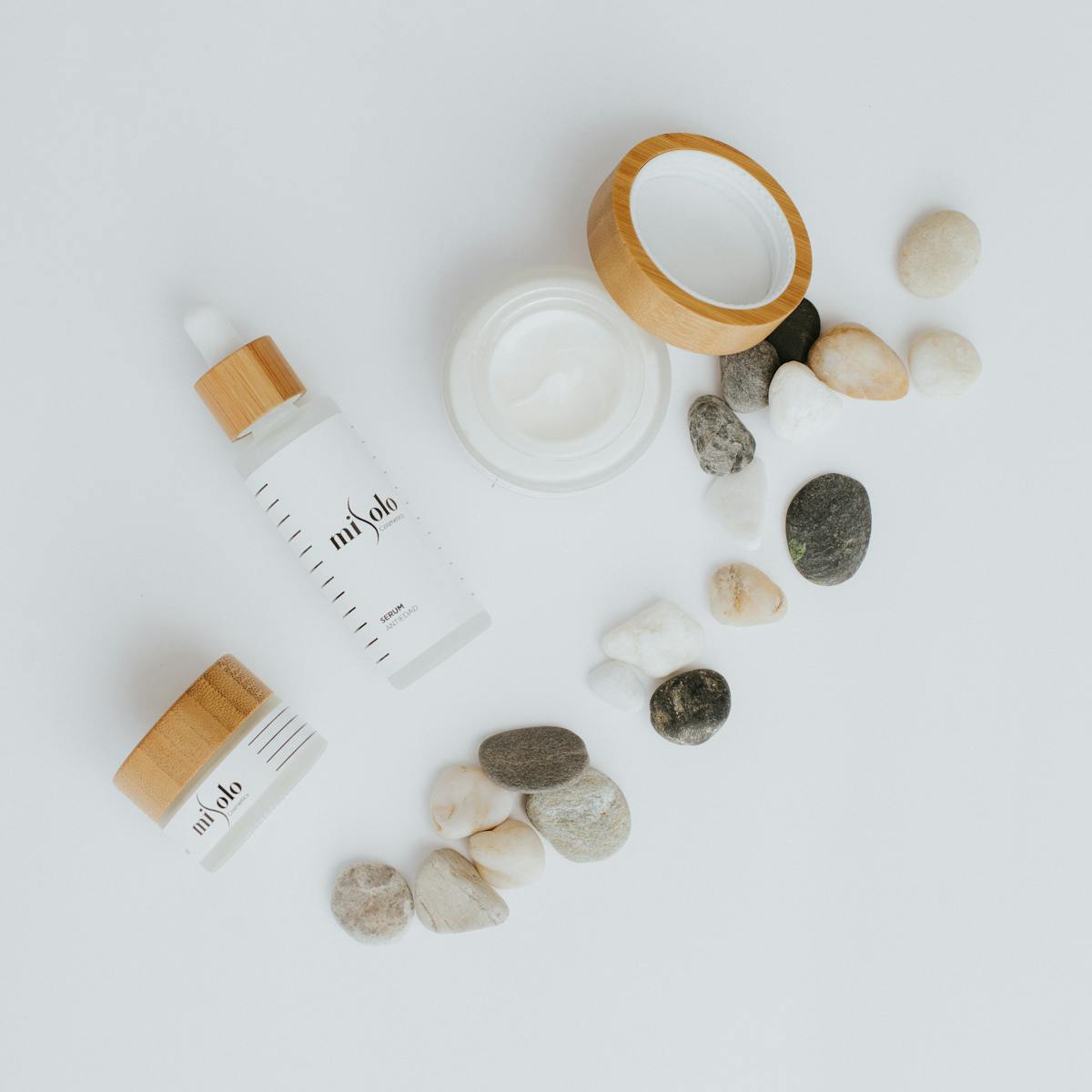
Hyaluronic acid is the best-known humectant in glass skin routines. It draws water from the environment and from deeper skin layers toward the surface. The widely-repeated marketing claim that it holds “1,000 times its weight in water” has been directly challenged by a 2023 analysis published at ChemRxiv, which found that actual water-binding capacity in real conditions is considerably more modest – closer to 50x at visible gelation. The practical effect as a humectant is still real and meaningful – just not the dramatic figure you’ll see on product packaging. Multi-weight HA formulas (combining low and high molecular weight) give both surface plumping and deeper hydration.
Ceramides are structural lipids that make up roughly half of the skin’s outer barrier. Topical ceramides help replenish what’s lost through environmental exposure, harsh products, and the natural decline that comes with age. A ceramide-containing moisturiser isn’t a luxury add-on in a glass skin routine – it’s doing foundational work. Research on ceramide barrier function confirms their role in maintaining the barrier that makes retained hydration possible.
Niacinamide earns its place through several mechanisms: it improves the skin barrier, reduces redness and blotchiness, regulates oil production, and has modest evidence for improving pore appearance over time. It’s well-tolerated, which matters when you’re building a multi-step routine.
Centella asiatica (cica) is anti-inflammatory and supports barrier repair. It shows up constantly in K-beauty formulas for good reason – it soothes reactive skin and helps maintain the calm, even-toned look that glass skin requires.
What’s the Honest Timeline for Seeing Results?
Week one to two: skin feels more hydrated and comfortable. This is the fastest and most reliable effect of consistent layered hydration. Week three to four: texture starts improving – rough patches smooth out, skin tone looks more even. Six to eight weeks in: with consistent use, you’ll likely see meaningful improvement in luminosity, clarity, and how your skin holds moisture through the day.
The “glass” quality – the translucent, light-reflecting look – builds gradually as your barrier strengthens and hydration becomes a stable baseline rather than a daily fluctuation. It doesn’t arrive suddenly. Most people notice it most clearly when they go without makeup and realise their skin looks better than it used to without it.
The routines that produce the best results are the ones people actually stick to. Glass skin rewards consistency more than product spend.
What Should You Realistically Expect from This Routine?
Your skin will be measurably healthier, more hydrated, and clearer. Texture will improve. Redness and blotchiness will likely reduce, especially if niacinamide is in your lineup. You’ll have skin that holds a natural glow without much product help.
Will it look exactly like the glass skin editorial you’ve been saving? That depends on lighting, genetics, and whether the person in the photo had professional makeup. The routine can’t override your baseline pore size or bone structure. What it can do – and genuinely does – is give you the best possible version of your skin, which is a worthwhile goal regardless of what the algorithm is promoting this week.
FAQ
Does glass skin work for oily or acne-prone skin?
Yes, with some adjustments. The layering approach works for oily skin when you use lightweight, non-comedogenic textures at each step. Gel-based toners, water-based essences, and lightweight gel moisturisers are the right format. Niacinamide is particularly useful for oily and acne-prone skin, as it helps regulate sebum and reduce redness. Avoid rich cream moisturisers and heavy oils if you’re prone to congestion.
What’s the difference between a K-beauty toner and a regular toner?
Traditional Western toners were often alcohol-heavy and astringent – designed to remove residue and “tighten” pores, which mainly meant stripping the skin. K-beauty hydrating toners work differently. They’re lightweight, often watery, and full of humectants and soothing actives. Their purpose is to add the first layer of hydration and prepare skin to absorb the steps that follow. If your toner stings or leaves your skin feeling tight, it’s the wrong type for this routine.
Do you need to use an essence, or can you skip it?
You can skip it. The essence step adds depth to the layering effect, but a good hydrating toner followed by a serum covers most of what an essence contributes. If you’re starting out, build the core routine first – double cleanse, toner, serum, moisturiser, SPF – and add an essence later if you want to deepen the hydration layers. Don’t buy a lot of products at once, because you won’t know what’s working.
Can glass skin work without Korean brands specifically?
Absolutely. The glass skin routine is an approach, not a brand requirement. The core ingredients – ceramides, hyaluronic acid, niacinamide, centella asiatica – are widely available across price points and brands. Korean and Japanese formulas are worth trying, particularly for SPF (their textures tend to be excellent), but you can build an effective glass skin routine with products from any country.
How long before I see glass skin results?
Most people notice hydration improvement within the first week. Visible improvements in texture and skin tone evenness tend to appear at three to four weeks. The full glass skin effect – the luminous, well-hydrated, even-textured look – develops over six to eight weeks of consistent daily use. Skin responds to stability. Cycling through different products every two weeks will delay results considerably.
Comments are closed.