Vitamin C Serum Benefits: What It Actually Does (and What’s Just Marketing)
Stand in front of the serums shelf in any beauty store and count how many products use the word “brightening.” Dozens, probably. Vitamin C is one of the most over-marketed ingredients in skincare – and also, genuinely, one of the most useful. The problem is that the real story gets buried under a layer of breathless copy about “luminous radiance” and “skin transformation.”
So here is the version without the adjectives. What vitamin C serum actually does, which form of it works, what happens when it oxidises, and what timeline you can realistically expect.
Key Takeaways
– A 2017 PMC review (PMC5605218) confirms topical vitamin C at 10-20% concentration shows measurable antioxidant, brightening, and collagen-supporting effects.
– L-ascorbic acid is the most studied and most effective form – but it oxidises and loses efficacy when exposed to air, light, or heat.
– Vitamin C works by inhibiting tyrosinase, the enzyme your skin uses to produce melanin – which is why it fades dark spots gradually over consistent use.
What Does Vitamin C Serum Actually Do for Your Skin?
Vitamin C – specifically L-ascorbic acid – is an antioxidant that neutralises free radicals before they can damage skin cells, degrade collagen, and accelerate visible aging. Think of it as a second line of defence that works alongside your SPF rather than replacing it. According to a comprehensive review published in PMC (PMC5605218), topical vitamin C provides measurable photoprotective, anti-aging, and antipigmentary effects when formulated correctly and used at the right concentration.
Beyond antioxidant activity, vitamin C plays a structural role in collagen synthesis. Your skin literally cannot produce collagen without it. Topical application does support this process – the question of how much it contributes over and above what the body is already doing is still being refined in research, but the effect is real and tends to become more visible over months of consistent use, particularly in older skin. That’s a meaningful claim, backed by actual biochemistry – not just ingredient marketing.
How Does Vitamin C Fade Dark Spots?
The brightening effect is the one vitamin C is best known for, and the mechanism is well-documented. Vitamin C inhibits an enzyme called tyrosinase, which your skin uses to produce melanin. Less tyrosinase activity means less new pigmentation is formed. Applied consistently, this fades post-acne marks, sun spots, and general uneven tone over time.
It won’t lighten your natural skin tone. That’s not how it works, and that’s not what the research shows. What it does is slow down the overproduction of melanin in areas where it’s concentrated – dark spots, hyperpigmentation patches – so that as your skin renews itself (roughly every 28 days), those areas gradually fade. Don’t expect overnight results. Most people see a meaningful change in skin tone evenness at around eight to twelve weeks of consistent morning use.
Which Form of Vitamin C Actually Works?
Not all vitamin C serums contain the same ingredient. This matters more than most product marketing lets on.
L-ascorbic acid is the active form – the one your skin uses directly, the one with the most clinical research, and the one referenced in the PMC5605218 review. It works at a low pH (around 3-3.5), which is what allows it to stay stable and penetrate the skin. This acidity is also why it can sting, particularly at higher concentrations or on barrier-compromised skin.
The effective concentration range is well-established. Clinical studies show meaningful results at 10% and above. Most dermatologists recommend 10-15% as the practical sweet spot – effective without unnecessary irritation. Above 20%, results don’t improve proportionally and irritation increases significantly. Start at 10% if you’re new to vitamin C.
Vitamin C derivatives – ascorbyl glucoside, sodium ascorbyl phosphate, ascorbyl tetraisopalmitate among others – are more stable and generally gentler. The tradeoff is that they need to be converted to L-ascorbic acid by your skin before becoming active, which reduces overall potency. Among derivatives, ascorbyl glucoside and sodium ascorbyl phosphate have the most published evidence. They’re a reasonable choice for sensitive skin that doesn’t tolerate the acidity of L-ascorbic acid, with the understanding that the ceiling is lower.
The honest summary: L-ascorbic acid at 10-15%, well formulated, delivers the best results. If your skin can’t tolerate it, a derivative is a fair second option – just don’t expect equivalent performance.

What Happens When Vitamin C Oxidises?
This is the part most product descriptions skip. L-ascorbic acid is unstable. Exposed to air, light, or heat, it oxidises – visually, the serum shifts from clear or light yellow to orange, then brown. An oxidised vitamin C serum doesn’t just stop working. It may actually generate the free radicals you were trying to neutralise, which is the opposite of what you want.
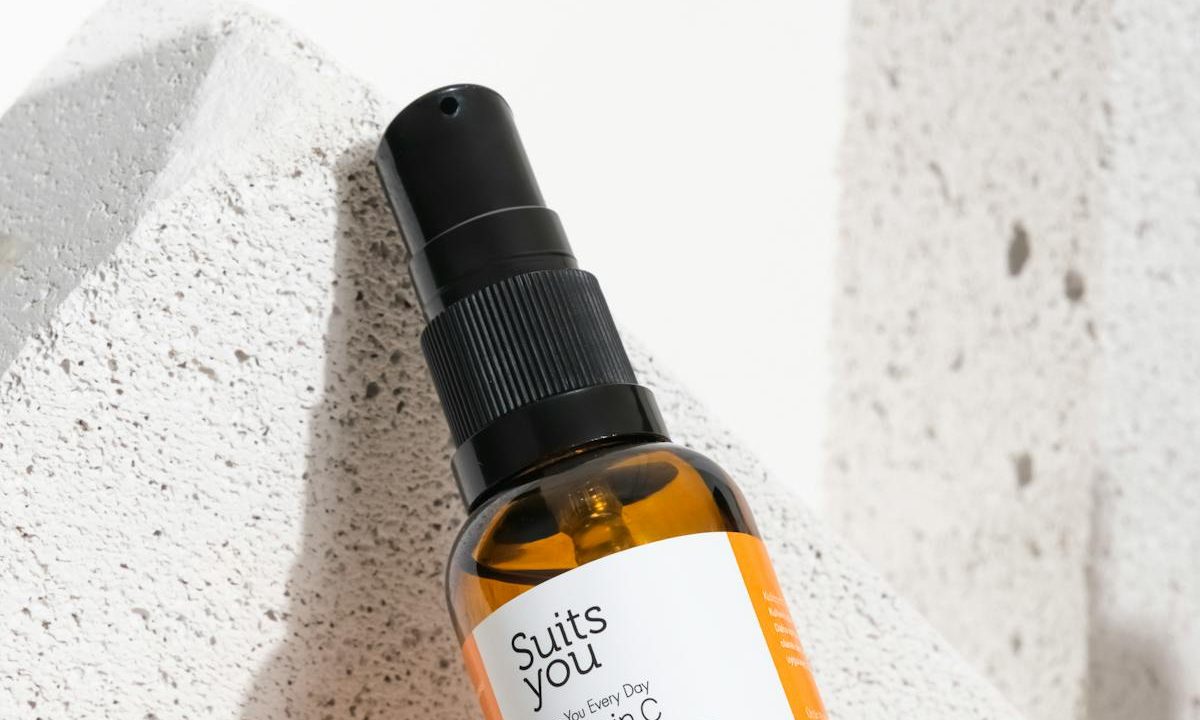
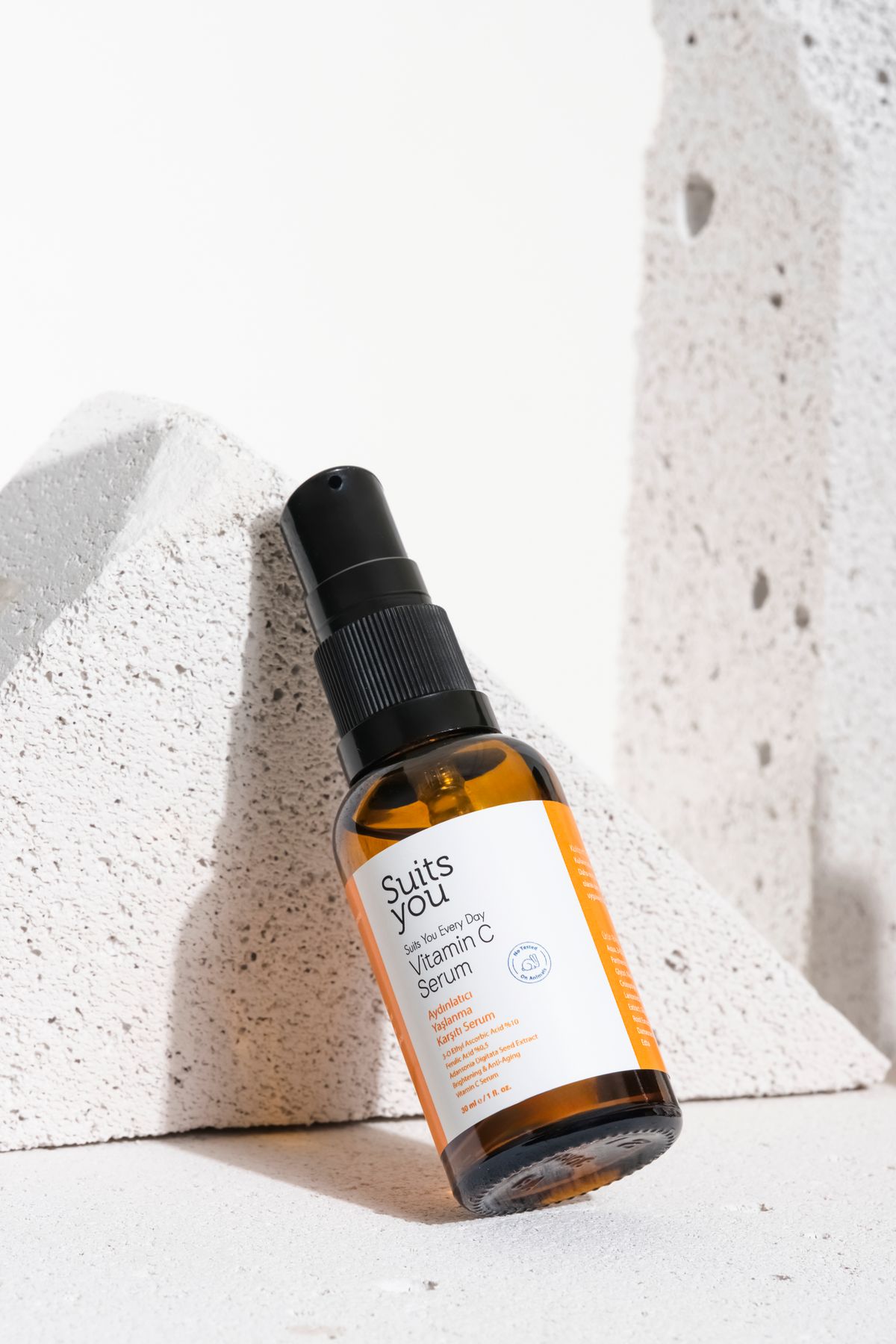
This is why vitamin C serums come in dark glass bottles with pump dispensers rather than open jars. It’s why storage matters. Keep your serum in a cool, dark drawer (not a sunny bathroom shelf). Some people refrigerate theirs, which does extend shelf life. Use it within three to six months of opening. If your serum has turned noticeably orange or brown, replace it – don’t push through to the end of the bottle.
If you’re buying from a brand that sells vitamin C in a clear glass jar, displayed under shop lighting, that’s a product that may already be partially degraded before you’ve even opened it.
How Do You Use Vitamin C Without Irritation?
Start low. A 10% L-ascorbic acid serum is a reasonable entry point. Higher concentrations don’t give better results in the short term – they give more irritation. You can build to a higher percentage once you know how your skin responds.
Use it in the morning, after cleansing and before moisturiser. Morning application makes functional sense: you’re sending an antioxidant out into the world before UV exposure and pollution start generating free radicals. Evening use isn’t harmful, but you’re not maximising what the ingredient does.
Don’t apply it on the same morning as a chemical exfoliant. Stacking multiple acidic products in one session is a reliable irritation trigger, especially for new users. Keep AHAs and BHAs to evening use and vitamin C stays strictly morning-only – that separation solves most compatibility issues.
Give the serum a minute or two to absorb before applying moisturiser. You don’t need a stopwatch, but you do want it to penetrate before you layer something on top.
What About Using Vitamin C with Niacinamide?
You’ve probably encountered the “don’t mix these” advice. It’s been circulating for years, and it traces back to a theoretical concern that L-ascorbic acid and niacinamide can combine to form nicotinic acid, a compound that causes skin flushing. Here’s the problem: the conditions required to produce meaningful amounts of nicotinic acid are temperatures of around 100 degrees Celsius, sustained over time. Your skin is not that temperature.
Current dermatology consensus, including recent analysis published at Healthline reviewing dermatologist input, has largely moved away from the “don’t mix” position. The practical approach is simple: use vitamin C in the morning and niacinamide in the evening – or, if you want both in the same session, apply vitamin C first and wait five to ten minutes before applying the niacinamide product. The pH difference is a minor practical consideration, not a safety concern.
What Are Realistic Expectations for Results?
Vitamin C is a maintenance ingredient as much as it is a treatment. You’ll see the fastest change in dark spot fading – typically noticeable at eight to twelve weeks. Collagen support effects take longer and tend to show up more subtly: slightly firmer skin texture, less prominent fine lines over months. The antioxidant protection is happening continuously and invisibly – you won’t see it in the mirror, but it’s accumulating benefit for your skin’s long-term health.
What you won’t get: transformation in a week, dramatic skin-clearing, or pore reduction (vitamin C doesn’t do that). The brands that promise visible change in days are describing the initial plumping effect of the formula’s other hydrating ingredients, not the vitamin C itself.
Price is a very unreliable proxy for quality here. Research comparing vitamin C formulations consistently shows that packaging, pH, and concentration matter far more than brand premium. A well-packaged, correctly formulated 15% L-ascorbic acid serum at a mid-range price will outperform an expensive one in a jar every time.
FAQ
At what percentage does vitamin C serum actually work?
Clinical research, including the widely-cited PMC5605218 review, shows meaningful effects at 10% and above for L-ascorbic acid. Below 10%, most studies find limited skin benefit. The practical recommended range is 10-15% for most people. Going above 20% increases irritation without proportional improvement in results.
Why does my vitamin C serum turn orange?
Oxidation. L-ascorbic acid degrades when exposed to air, light, and heat, and the colour shift from clear or pale yellow to orange or brown is a reliable visual indicator that the active ingredient is breaking down. A significantly oxidised serum has reduced – and potentially counterproductive – effects. Store in a cool dark place, use within three to six months of opening, and replace if it’s gone noticeably darker.
Can I use vitamin C serum every day?
Yes, and daily use is actually recommended to maintain the antioxidant benefit. The protection against UV-generated free radicals is cumulative and works best as a consistent morning habit. If you experience irritation at daily use, drop to every other day while your skin adjusts, then build back up.
Does vitamin C work on dark spots caused by acne?
Yes. Vitamin C fades post-inflammatory hyperpigmentation – the flat dark marks left after a spot heals – by inhibiting tyrosinase and slowing melanin overproduction in those areas. Results take eight to twelve weeks of consistent use. It won’t speed up healing of active breakouts, but it does help the aftermath.
What’s the difference between vitamin C serum and vitamin C moisturiser?
Serums are designed for active ingredient delivery – they’re lighter, penetrate more deeply, and contain the vitamin C at a therapeutic concentration. Moisturisers that contain vitamin C typically do so at lower concentrations and with less precision around pH and stability. For the documented benefits, a dedicated serum is the more reliable choice.
Comments are closed.