
There is a version of this conversation that starts with a big promise about transforming your mornings, improving your output, and becoming the kind of person who meditates before six a.m. This is not that version. Most people reading this already know what they should be doing. The problem is that knowing and actually doing the things are two very different topics when your calendar looks like a game of Tetris that you are already losing.
So rather than another perfected wellness plan that falls apart by Wednesday, here is something more honest. A view at things that actually matter when time is short, why the basics tend to get abandoned first, and how to build habits that have a reasonable chance of surviving a bad week.
Why Everything Else Falls Apart When Work Gets Busy
The pattern is familiar. Things get chaotic, and the first things to go down are usually the ones that feel optional – sleep gets shorter, meals become whatever is fastest, movement disappears entirely, and the evening ends in front of a screen because you are too drained to do anything else. Then the weekend arrives and you tell yourself you will reset. But you are tired, you have things to catch up on, and the reset never happens the way you have actually planned.
What makes this cycle really frustrating is that the habits that you drop when things get busy are exactly the ones that are the most crucial for your wellbeing. Sleep deprivation makes it harder to think clearly. Poor nutrition contributes to the afternoon energy slump and long-term brain fog . Sitting for hours without moving makes stress feel more physical and harder to battle. And the worst thing is that these things compound. And the longer the pattern runs, the harder it becomes to break it, not because the habits are difficult themselves, but because you are trying to build them while already running on an empty tank.
Sleep Is Not Negotiable, Even Though It Feels Like It Is

Most professionals treat sleep as the variable in the equation – the thing that gets cut when everything else needs to fit. That is understandable. It is also, one of the most counterproductive things you can do to for your performance. The research on sleep deprivation and cognitive function is pretty consistent: even moderate sleep loss drastically affects concentration, decision-making, emotional regulation, and the ability to handle pressure. These are not small things when your job requires all of them.
The practical side of this is less about achieving perfect sleep and more about protecting what you have. A consistent wake time appears to be more effective than trying to catch up at weekends. A rough wind-down routine, even just twenty minutes of lower stimulation before bed, seems to help more people than it does not. You do not need to overhaul your evenings. You just need to stop treating sleep as the last thing that gets whatever time is left over.
Hydration Is Boring to Talk About and Genuinely Worth Fixing
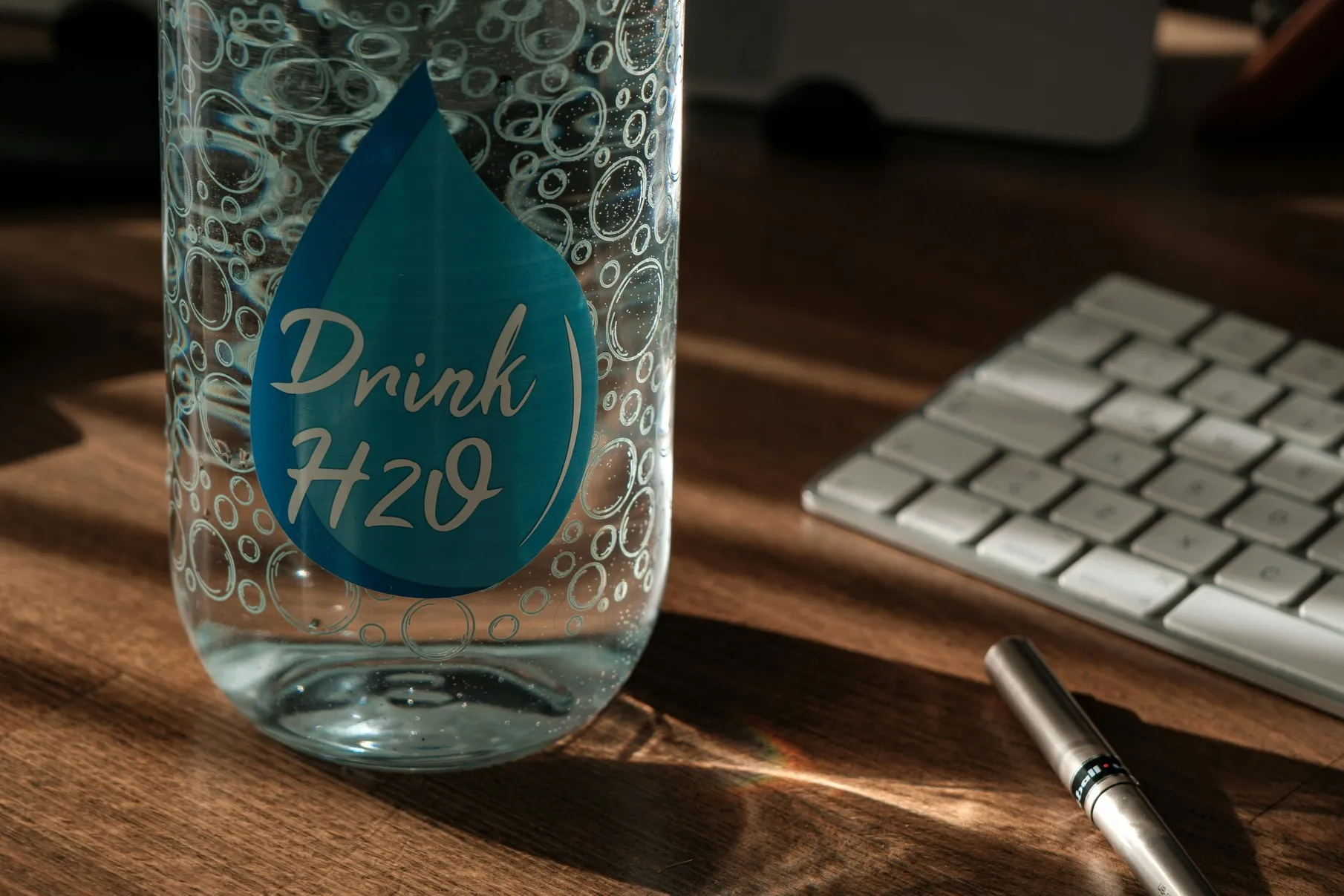
Drinking more water is genuinely the least interesting advice in this article, and also one of the immediately noticeable things that you can fix. Fatigue, difficulty concentrating, a low-grade headache which you cannot locate – these are things a lot of people blame on stress or a bad night’s sleep when the actual culprit is the two coffees they’ve had and nothing else since breakfast. Keeping a water bottle at your desk and actually refilling it is one of the lower-effort changes you can make with a fairly quick payoff. It is not glamorous advice. It works though.
Food – The Goal Is Steady Energy, Not Perfection
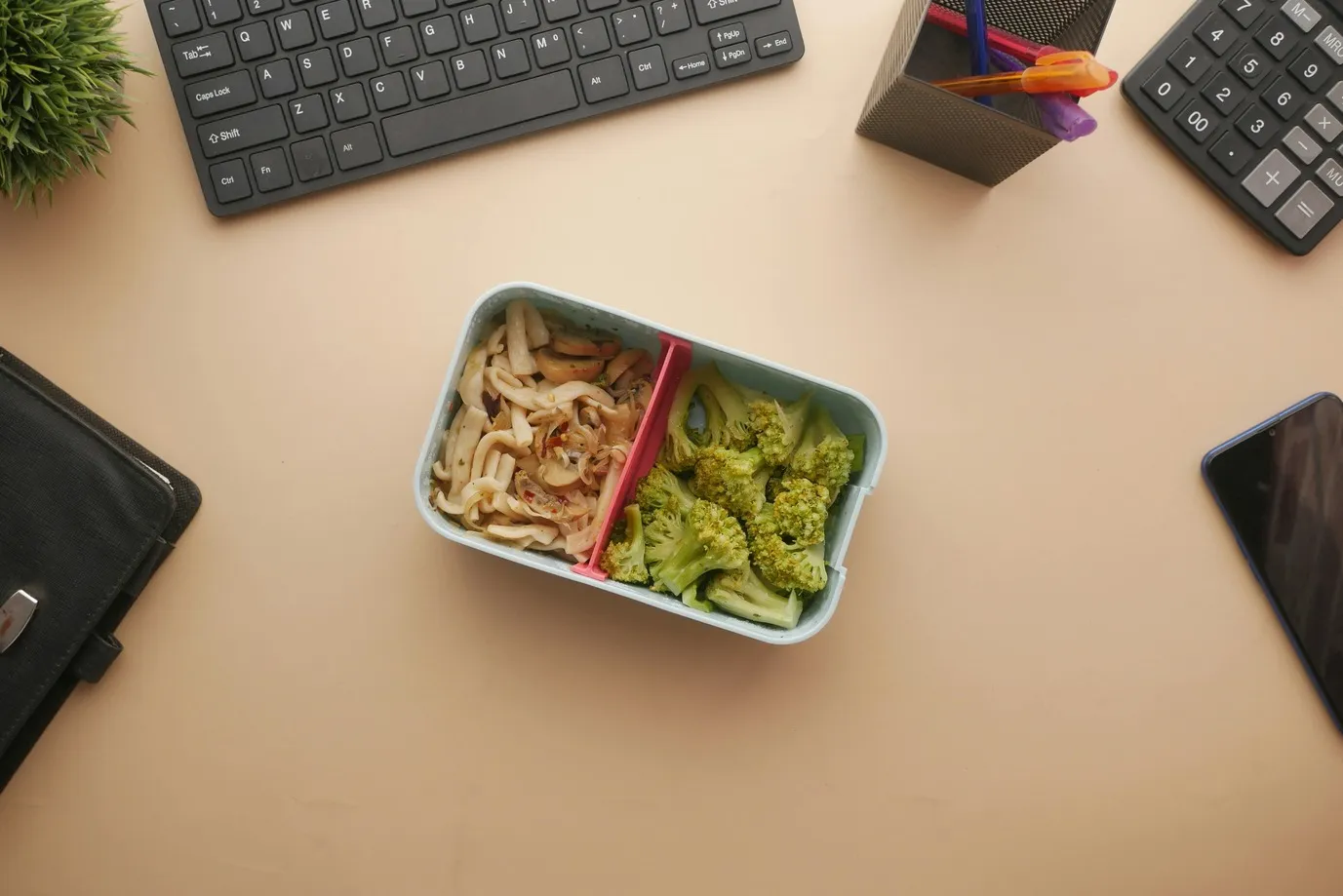
Busy schedules and good nutrition have a difficult relationship. When time is short, food becomes whatever is fastest, and whatever is fastest is usually not what your energy levels need. The resulting cycle of skipped meals, sugar spikes, and afternoon crashes is something most professionals recognise immediately, even if they have never quite connected it to how they feel by three in the afternoon.
The goal here is not to meal prep everything or eat perfectly. It is simply to make the better option slightly easier to reach for than the worse one. That could mean in keeping something filling at your desk, planning your lunch before you get hungry, or just eating a healthy breakfast instead of skipping it. Whole food protein and fibre keep energy more stable than refined carbohydrates, which is about as complicated as the nutrition advice needs to get for most people.
Movement Does Not Have to Mean the Gym

A lot of professionals have an all-or-nothing relationship with exercise. Either you do a proper workout or it does not count, which means that on the days when a proper workout is not happening – which during a busy period is most of them – nothing happens at all. That belief is worth challenging. Short walks, taking the stairs, stretching between calls, standing up and moving around for a few minutes – these things genuinely do something. Of course ,not the same as sustained exercise, but not nothing either, and for someone who is mostly sitting through the workday, they make a real difference to how the body feels by evening.
If you do have time for more structured movement, even two or three sessions a week will have a meaningful effect on stress, sleep quality, and mood. But the bar for getting started is lower than most people set it for themselves.
Stress Management Is Not a Personality Trait
There is a tendency to treat stress tolerance as something you either have or you do not. As if some people are just built for pressure and others are not. That is not quite right. Stress is a physiological response, and like most physiological responses – it can be influenced by what you do with it. The problem is that most people only think about managing stress when they are already overwhelmed, at which point the tools feel irritating rather than useful.
The more effective approach is to build small resets into the day before the pressure peaks. A few slow breaths before a difficult meeting. A short walk after a frustrating call. Stepping away from the screen for ten minutes. These habits may feel tiny compared to the scale of what you’re dealing with, but they appear to lower the physiological stress response in ways that build-up over time. The goal is not to eliminate pressure. It is to stop letting it build uninterrupted all day.
Boundaries Around Work Are a Wellness Habit Too
This one tends to get left out of wellness conversations, which focus more on what you do for yourself than on what you stop doing. But for a lot of busy professionals, the single most impactful change is not adding a new habit – it is stopping the habit of being available at all hours. Emails after dinner, messages at ten p.m., the background hum of work that never quite switches off: these things make genuine rest very difficult, and without genuine rest, everything else in a wellness routine becomes harder to sustain.
Setting a rough end to the workday, leaving notifications off in the evenings, not checking email in the hour before bed – none of these are radical acts. But they require a deliberate decision, because the default in most professional environments is that availability is unlimited unless you actively limit it. That boundary is worth drawing, not because work does not matter, but because recovery time is what makes sustained performance possible.
What a Realistic Routine Actually Looks Like
The honest answer is that a good wellness routine for a busy professional does not look like the ones in lifestyle articles. It is messier, more inconsistent, and more contextual. On some days, you will get eight hours of sleep, eat well, go for a walk, and feel like a person who has their life together. On other days, you will get six hours, eat lunch at your desk, and barely move. Both of those days are normal. The routine is not about what happens on the good days. It is about what the average looks like over time.
Starting small is genuinely better than starting comprehensively. One habit added and maintained is worth way more than five habits attempted ,but abandoned. Pick the thing that would make the most difference to how you feel on an average day and start there. Once it feels normal, add another. This approach is slower and less satisfying than a full overhaul, but it is also the one that actually tends to work.
The Part Nobody Likes to Hear
At some point, staying well during a busy period is not just a matter of habits and routines. It is a matter of what you are willing to protect. Most professionals know that sleep matters, that they should move more, that they need to eat better. The gap between knowing and doing is usually not a lack of information. It is that the conditions that make these things difficult, the workload, the expectations, the always-on culture, have been accepted as fixed when some of them are not. That is a harder conversation than optimising your morning routine. But it is the one worth having eventually.