Pilates for Beginners: What Nobody Tells You Before Your First Class
The first thing most people notice in their first pilates class is that they can’t do the things. Not the advanced things. The basic things. Movements that look effortless on the person two mats over, movements that the instructor describes in a single calm sentence, movements your brain is completely clear on – and your body is doing something entirely different.
That gap between the idea of a movement and your body’s actual execution of it is the core experience of early pilates. It’s not painful in the way a hard gym session is painful. It’s more like discovering you have muscles that have never been asked to do anything useful before. Muscles that have apparently been on an extended holiday while your more dominant ones compensated.
It gets better quickly. But knowing what you’re walking into is useful, because the first two sessions are the hardest part of the learning curve, and a lot of people quit before that curve turns.
Key Takeaways
– The NHS recommends pilates for improving flexibility, posture, and core strength
– A 2015 Cochrane Review found pilates was more effective than minimal intervention for reducing chronic lower back pain and disability
– Reformer sessions typically cost £20-40 per class in UK studios; mat pilates can be done at home for free
– Results are typically felt (posture, core awareness) within 3-4 weeks of consistent practice, 2-3 sessions per week
– The real benefits go well beyond aesthetics: joint stability, body awareness, and lower back health
What Pilates Actually Is (Beyond the Social Media Version)
Pilates was developed by Joseph Pilates in the early 20th century, originally called “Contrology.” The principles he built around it – controlled movement, breath coordination, spinal alignment, and working from a stable centre outward – are still the foundation of what you’ll encounter in a class today.
What it isn’t: purely core work. That’s the most common misconception. Pilates involves the whole body. The emphasis is on how muscles work together, not in isolation. It trains the deep stabilising muscles – the ones responsible for posture, spinal support, and joint stability – that tend to be underused in most conventional exercise. This is where it differs from standard gym core training, which typically isolates muscles like the rectus abdominis (the visible “six-pack”) rather than training them in coordination with everything else.
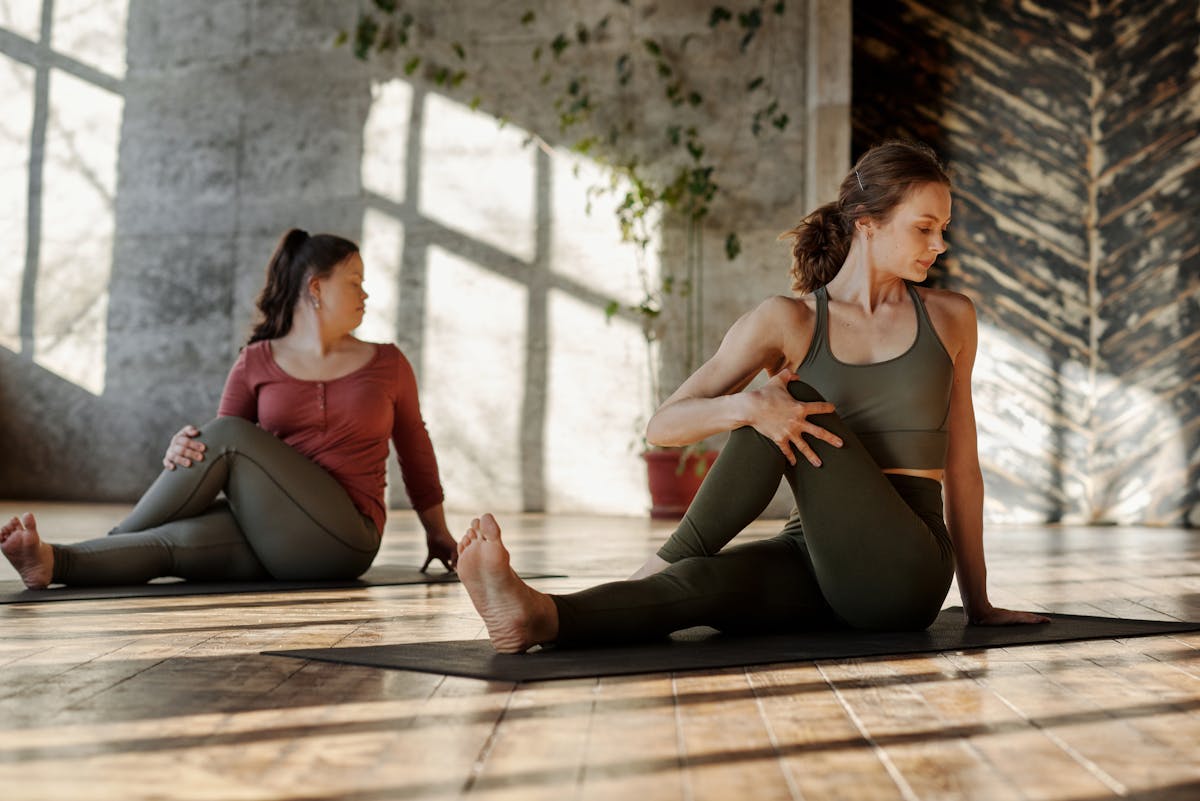
It also differs from yoga, despite some surface overlap. Yoga is primarily structured around poses, flexibility, and often includes meditative or spiritual elements. Pilates is more functional and precision-focused. The question is always: how precisely are you moving, and are the right structures doing the work?
That question is also why it’s harder than it looks from the outside.
Reformer vs Mat: An Honest Cost-Benefit Comparison
This is the question most beginners ask first, and it deserves a direct answer.
Mat pilates uses your bodyweight plus occasional props: resistance bands, a small ball, a foam roller. It can be done at home with an internet connection and a mat. It costs nothing beyond that. It’s a legitimate, effective practice. The full range of pilates movement isn’t available on the mat – some exercises simply require the reformer’s spring system – but the foundations absolutely are.
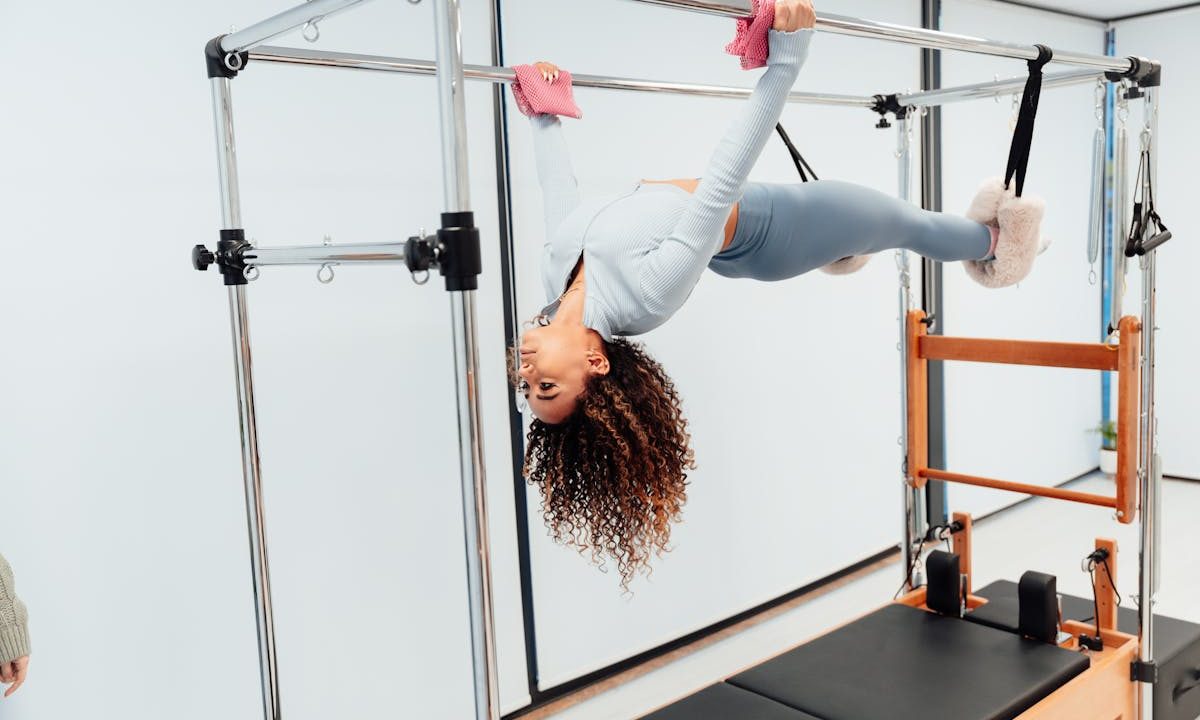
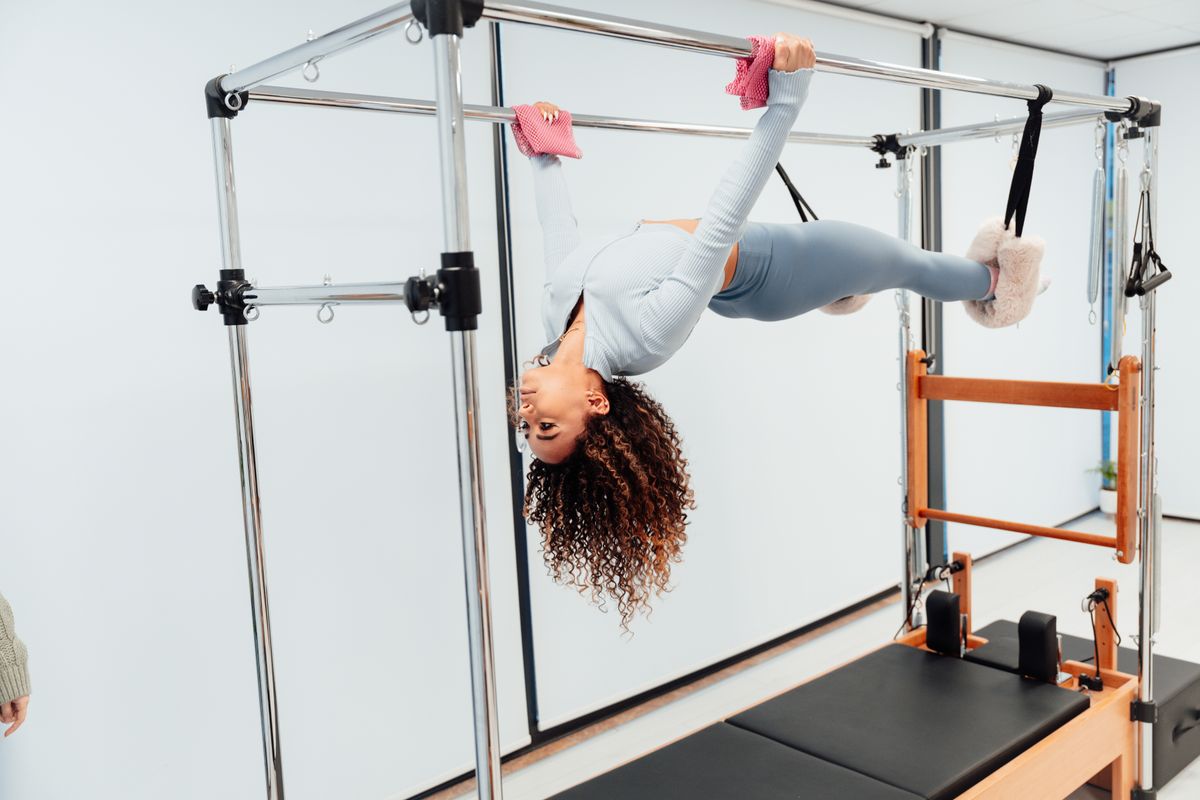
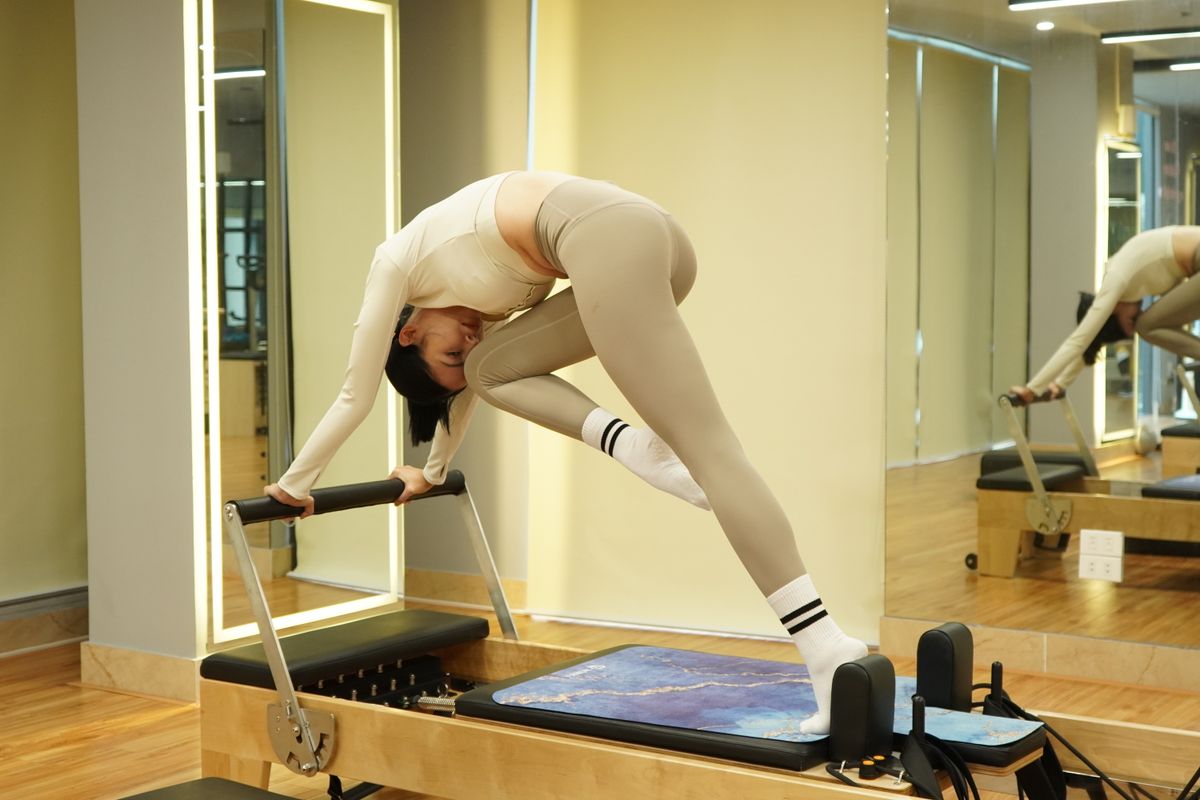
Reformer pilates uses a sliding carriage on a frame with an adjustable spring resistance system. The springs can add resistance or assist movement, which makes exercises more modifiable and more precise. The reformer also gives you physical feedback about your alignment in a way that’s genuinely difficult to replicate on the mat. This is useful for beginners in particular: you feel when you’re compensating or misaligned because the carriage moves differently.
The honest trade-off is cost. Reformer sessions in most UK and US cities run £20-40 per class. You’ll typically need 8-10 sessions before you’re getting full value from the format – the learning curve means early sessions are partly spent figuring out the equipment. If you’re in a smaller town, there may not be a reformer studio accessible at all.
For most beginners: if cost or access is a barrier, start with mat. Good mat pilates with a qualified instructor gives you most of the foundational benefits. Move to reformer when you can, because the feedback it provides is genuinely useful. But don’t let the reformer be the gatekeeper between you and starting.
What to Expect in Your First Three Sessions
Knowing this in advance is more useful than being surprised by it.
Session one: Confusing. You’ll spend a significant amount of energy just translating instruction into physical action. “Find neutral spine” sounds simple until you realise you don’t know where neutral is. “Engage your core” will need to be explained several times before the sensation makes sense. This is completely normal. You’re building a new vocabulary between your brain and your body. It takes repetition.
Your first session may also feel deceptively easy in parts – until the next day, when you’re sore in places you didn’t know you had. The deep hip flexors, the muscles around the shoulder blades, the obliques. These are the muscles that don’t get much attention in most exercise forms. They notice.
Sessions two and three: Still awkward, but the concepts start to land. You’ll begin feeling what it means to initiate movement from your centre rather than your limbs. Some exercises will start to feel like they’re making sense. Take modifications when they’re offered. Doing the modified version correctly is better than doing the harder version badly – and in pilates, form is the entire point.
By sessions four and five: The click happens. Most people who stick it out report this – a point where the practice stops feeling like a translation problem and starts feeling like movement. The vocabulary has settled. The experience shifts from frustrating to satisfying quite quickly.
The Real Benefits (Not the Aesthetic Marketing)
Pilates studios market heavily on aesthetics: the long lean look, the toned arms, the “pilates body.” This framing is reductive, and for many people it’s off-putting. The actual benefits worth knowing about are more durable and more varied.
Posture. This is the most consistently reported early benefit, and the mechanism is clear. Pilates strengthens the deep postural muscles – the ones that maintain spinal alignment and shoulder positioning – that most other exercise forms largely ignore. If you sit at a desk for most of the day, these muscles are almost certainly weaker than ideal. Pilates addresses this directly.
Lower back health. The evidence here is solid. A 2015 Cochrane Review found that pilates was more effective than minimal intervention for reducing pain and disability in people with chronic non-specific lower back pain. A more recent 2022 network meta-analysis in the Journal of Orthopaedic and Sports Physical Therapy confirmed pilates and core-stability training among the most effective exercise approaches for chronic lower back pain. The NHS includes pilates in its recommendations for back pain management.
Functional core strength. Not six-pack muscles – the deeper transverse abdominis, pelvic floor, and spinal stabilisers that support how you move through real life. This translates to better performance in other physical activities and less compensatory movement that leads to injury.
Body awareness. Harder to quantify but consistently reported. Knowing where your body is in space, recognising habitual compensation patterns, noticing when one side is doing more than the other – these develop over time and have practical effects on how you move and how often you get injured.
What pilates won’t reliably do: significantly change your body composition or provide meaningful cardiovascular training. These aren’t limitations to apologise for; they’re just an honest description of what pilates is and isn’t. If cardiovascular fitness is a priority, pilates works well alongside other exercise, not instead of it.
How to Find a Good Instructor or Programme
In a studio, look for a recognised qualification: Body Control Pilates, STOTT Pilates, BASI, or similar. Check that the instructor has specific experience with beginners. Someone excellent at teaching advanced clients may not be patient or clear with people who don’t yet have the vocabulary or body awareness. A beginner-specific class is worth seeking over a mixed-level class where modifications for newcomers may not be the focus.
For online practice, the options have genuinely improved. Pilates Anytime has strong beginner content. YouTube channels like Lottie Murphy and Move With Nicole offer accessible beginner sequences. The limitation of online is feedback: no one can tell you if your spine is in neutral or if you’re compensating through your neck. Pairing online practice with occasional in-person sessions, especially early on, is worth it for this reason.
Common Beginner Mistakes to Avoid
Holding your breath. Pilates has specific breath cuing that beginners don’t need to worry about immediately. But holding your breath during effort is a near-universal beginner habit and it undermines the practice. Just breathe. Coordination with movement comes later.
Gripping in the neck and jaw. When movement gets hard, people brace everywhere – including places that have nothing to do with the exercise. Watch for tension in your face, neck, and shoulders during exercises that are meant to work your core.
Skipping the setup position. Every exercise has a starting position that matters. The setup is where you establish the alignment and engagement the exercise is built on. Rushing past it to get to “the exercise” is like building on sand.
Comparing your session one to someone else’s year five. The person who looks effortless has done this several hundred times. They were once confused too.
Quitting after two sessions. The learning curve is real, and it peaks in the first few sessions. Most people who reach session four are glad they pushed through the awkward part.
How Long Before You Notice Results
Three to four weeks of consistent practice – two to three sessions per week – is when most beginners report feeling a difference. Posture awareness tends to come first: you start noticing how you sit, catching slouching in real time. The sense of core engagement clicks into place around the same time.
Visible changes to body composition are slower, more variable, and depend heavily on factors outside the pilates practice itself. If that’s what you’re tracking, pilates alone won’t deliver it on the timeline most people hope for. The results worth tracking are functional: a movement you couldn’t control a month ago that you now can; a lower back that bothers you less; less fatigue from sitting at your desk. These are real improvements. They just don’t photograph well.
FAQs About Pilates for Beginners
Do I need any equipment to start pilates at home?
For mat pilates at home, you need a mat and nothing else to begin. A yoga mat works fine. Some exercises use resistance bands or a small pilates ball, but these are supplements, not requirements. You can get weeks of solid beginner work done with just a mat and a good free YouTube playlist. The NHS has a free beginner pilates video to get you started.
Is pilates good for lower back pain?
Yes – with the caveat that you should speak to a GP or physiotherapist before starting if you have existing back pain. The 2015 Cochrane Review found pilates more effective than minimal intervention for chronic non-specific lower back pain. Pilates is used extensively in physiotherapy and rehabilitation settings for exactly this reason: it strengthens the deep stabilising structures around the spine without high-impact loading.
How is pilates different from yoga?
Both improve flexibility and body awareness and use controlled breathing. The focus diverges from there. Yoga is structured around poses, often incorporates meditative and spiritual elements, and has a broader flexibility emphasis. Pilates is more functionally focused, more precision-based, and specifically oriented around spine alignment and controlled movement from a stable core. They complement each other well; they’re not interchangeable.
How many times per week should a beginner do pilates?
Two to three sessions per week is the standard recommendation for building the neuromuscular connections that pilates develops. More than that in the early weeks isn’t necessarily more beneficial – the deep stabiliser muscles pilates targets need recovery time. Consistency over weeks matters more than frequency within a week.
Will pilates help with posture?
Yes. Improved posture is one of the most consistently reported and earliest-felt benefits of regular pilates practice. The method specifically targets the deep postural muscles that desk work and sedentary habits weaken – the muscles that maintain spinal alignment and shoulder positioning. Most regular practitioners notice a change in how they sit and stand within a few weeks.
Comments are closed.