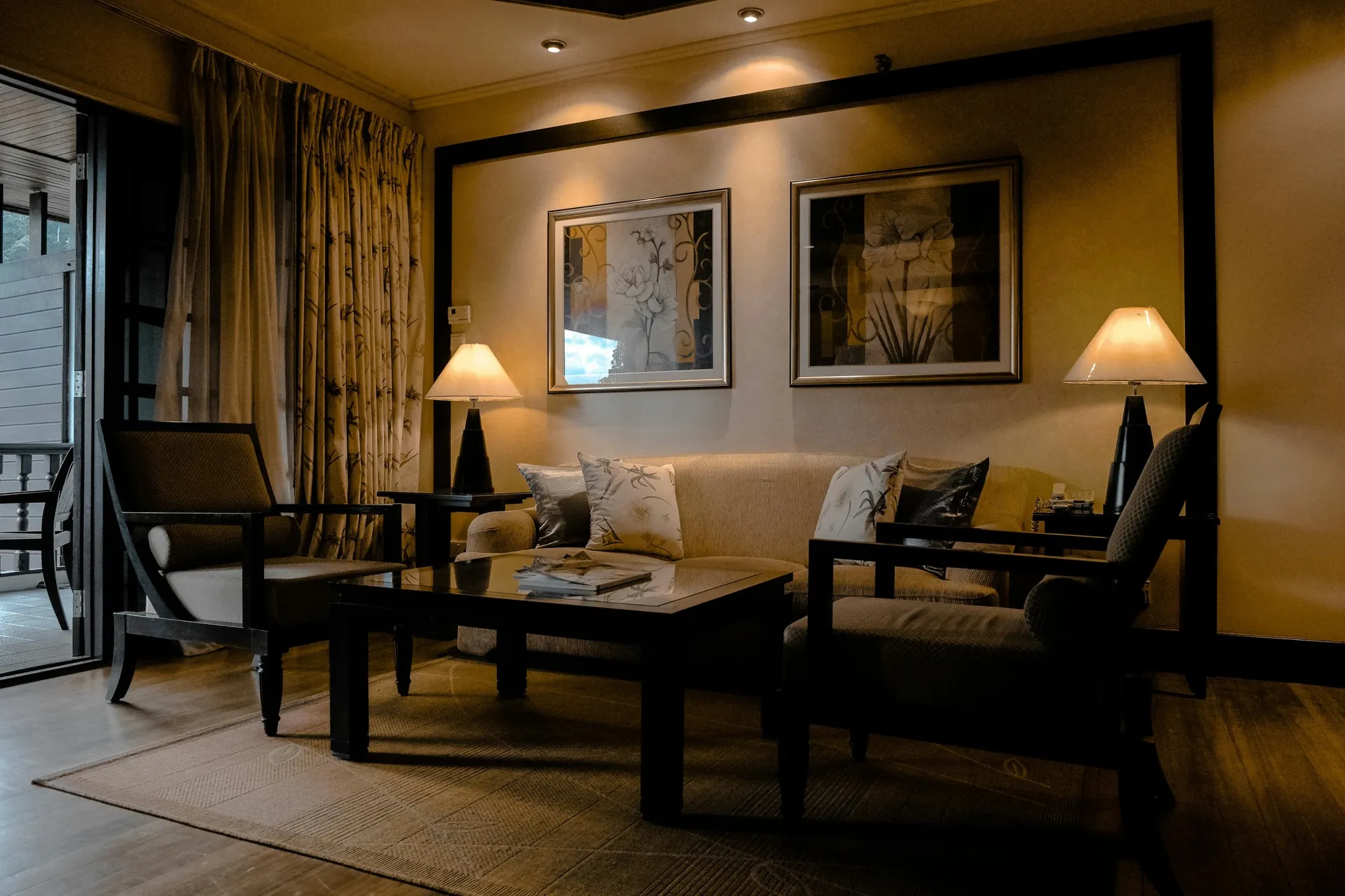
Somewhere along the way, the idea spread that a stylish home requires lots of money. It does not. What it requires is a bit of patience, some willingness to experiment, and the ability to look at what you already have and see it differently. Some of the most elegant spaces are put together on almost nothing, and once you start noticing that, it is hard to unsee it.
What follows is a collection of ideas that genuinely work, whether you have a small budget to play with or practically none at all.
Wall and Lighting Decor Ideas
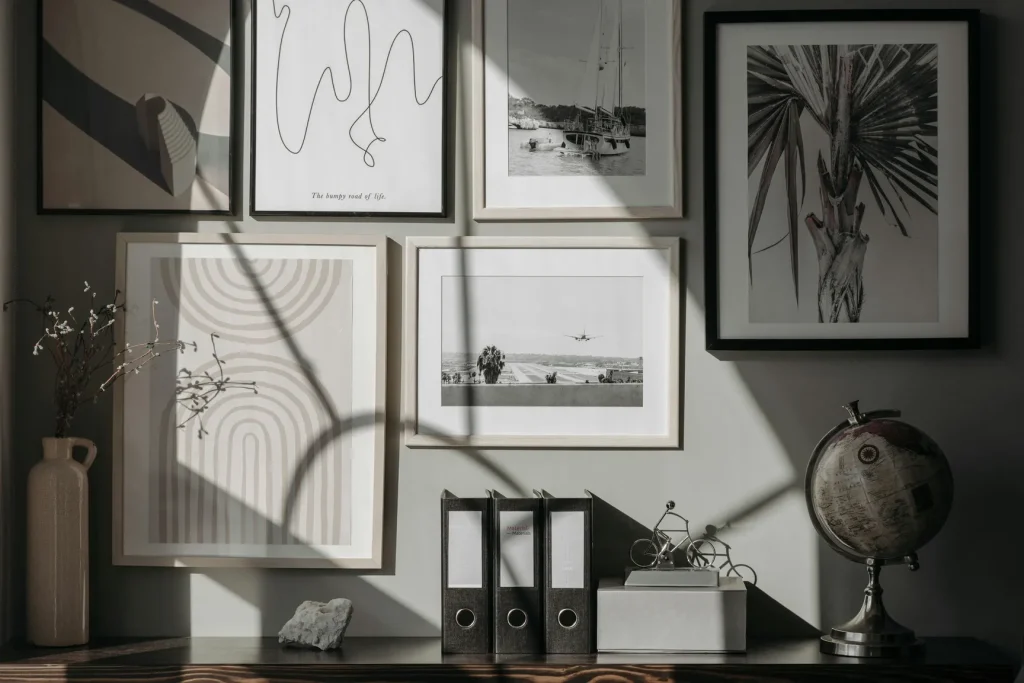
Gallery wall with personal artwork
A gallery wall is one of those ideas that sounds simple and somehow keeps working no matter how many times you see it done. The reason is that it is personal. A wall covered in things that actually mean something to you, your own photographs, prints you bought for a few euros, a drawing a friend made, looks different from a wall decorated with things bought purely to fill space. People can feel the difference even if they cannot always say why.
The practical side of it is straightforward. Mix frame sizes and styles rather than matching everything perfectly, hang pieces at roughly eye level, and do not be afraid to include things that are not traditional art. A postcard, a page torn from a book, a child’s drawing in a decent frame – all of these work. Good lighting above or beside the arrangement makes a noticeable difference too, pulling the whole thing together in a way that feels intentional rather than accidental.
Removable wallpaper
Removable wallpaper has become genuinely good in recent years, which was not always the case. It peels off cleanly, comes in patterns ranging from subtle textures to bold geometric prints, and costs a fraction of traditional wallpaper. For renters especially, it is one of the more useful tools available, since it allows for real visual impact without any permanent changes. Even a single accent wall can shift the feeling of a room considerably, and if you get tired of it, you simply take it down.
DIY mirror using wooden beads
A plain mirror becomes something quite different when you frame it yourself. Wooden beads glued around the edge, whether natural, painted, or stained, give it a handmade quality that tends to look more considered than most things you would find in a homeware shop at the same price point. The process is simple: apply strong glue around the perimeter, press the beads in firmly, and let it dry fully before hanging. Placed above a console table or in an entryway, it reads as a deliberate decorative choice rather than a budget solution.
Plug-in wall scones
Lighting makes an enormous difference to how a room feels, and plug-in sconces are one of the easiest ways to add it without any rewiring or landlord involvement. They come in a wide range of styles now, from minimalist to ornate, and many are genuinely affordable. Positioned beside a bed or in a reading corner, they add a warmth that overhead lighting rarely achieves. If your room relies entirely on a single ceiling light, adding even one sconce changes the atmosphere considerably.
Updating old fixtures with spray paint
Spray paint is underrated as a decor tool. Old lamp bases, cabinet handles, light switch plates, curtain rods – most of these can be transformed in an afternoon for very little money. A dated brass fixture painted matte black looks current. A tired chrome handle painted in a warm antique gold reads as intentional rather than old. The key is preparation: clean the surface properly, use a primer if needed, and apply thin coats rather than one heavy one. The finish will look far more professional for the extra ten minutes it takes.
Furniture and Textiles
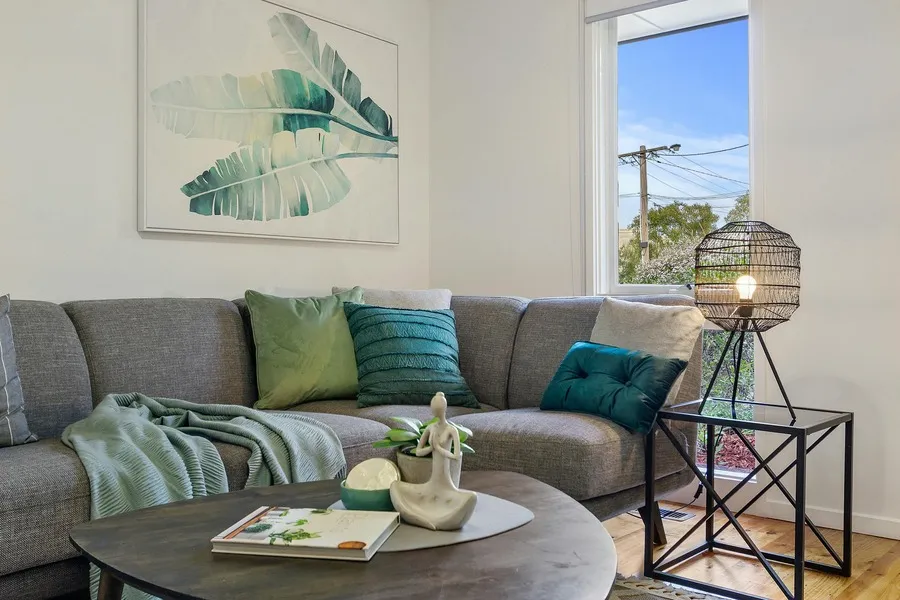
Repurposing old furniture through paint or hardware updates
Before writing off a piece of furniture as too old or too ugly, it is worth considering what it would look like with a coat of paint and different hardware. The answer is often: completely different. A chest of drawers that looks tired in its original finish can look quite elegant in a deep navy or a warm off-white. Swap the original handles for something better, brushed brass, black iron, ceramic knobs, and the transformation is usually striking. This approach works especially well for solid wood pieces, which take paint well and tend to have good bones even when they look rough on the surface.
Using slipcovers instead of buying new furniture
A sofa or armchair that no longer works with your space does not necessarily need replacing. Slipcovers have improved considerably in terms of how they look and fit, and a well-chosen one can make a tired piece look almost new. They also make practical sense if you have children or pets, since they can be removed and washed in a way that upholstered furniture cannot. Changing them seasonally is an easy way to shift the feeling of a room without any real expense.
Changing cushion covers instead of replacing entire pillows
Cushion inserts last for years. The covers are what make a room, and replacing covers rather than whole cushions is an obvious way to refresh a space for very little money. Velvet covers in jewel tones, linen in neutral shades, textured weaves in warm earthy colours, all of these read as considered and add something to a room. Mixing textures tends to look better than matching everything precisely, which is also fortunate because it is cheaper.
Adding trim to basic curtains
Plain curtains from a budget shop can look genuinely good with the right trim added. Lace, ribbon, tassels, a band of contrasting fabric along the hem – any of these give a basic panel a custom feel that most people would not immediately identify as DIY. Fabric glue works well enough for most trims, though a sewing machine gives a cleaner finish if you have access to one. The effect for the cost involved is one of the better returns in budget decorating.
DIY and Decor Accents
Faux plants and vines for wall decoration
Real plants are always preferable, but faux plants have become convincing enough that the distinction is not always obvious, particularly with greenery like trailing pothos or eucalyptus. Hung from the ceiling, draped along a shelf, or wound around a mirror frame, they add the kind of softness that a room full of hard surfaces often needs. The main advantage over real plants in this context is that placement is entirely flexible. You can put greenery exactly where you want it without worrying about light or watering.
Jute rope crafts for a rustic touch
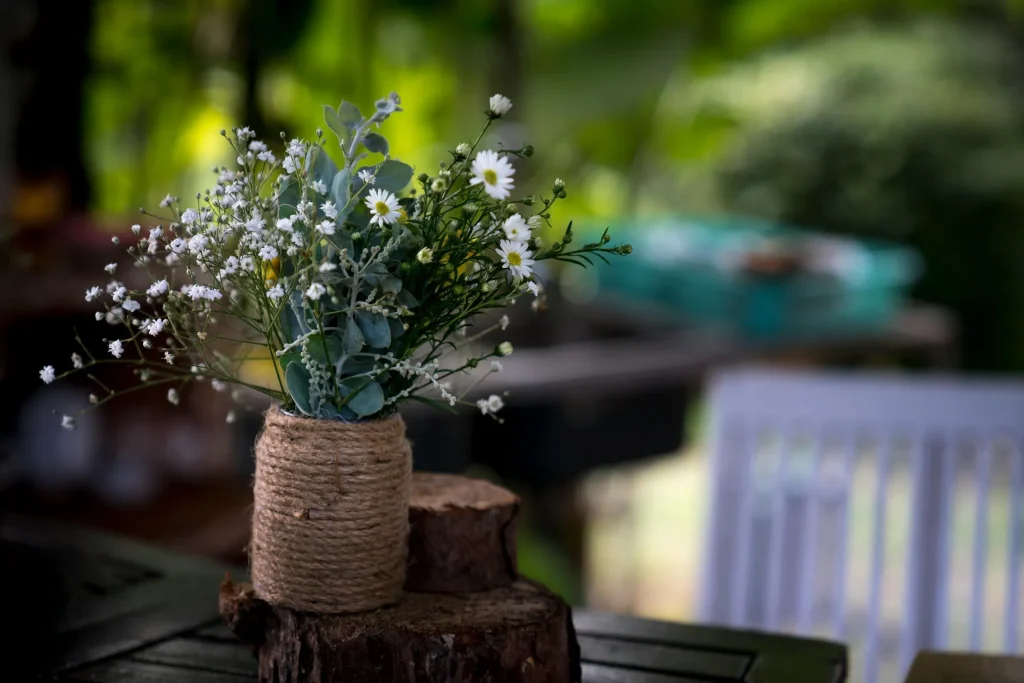
Jute is one of those materials that manages to look both inexpensive and intentional at the same time, which is a useful quality in budget decorating. Wrapping a plain glass vase tightly in jute rope takes about ten minutes and produces something that looks considered and tactile. The same approach works on candle holders, picture frames, and bowls. For wall hangings, cutting lengths of jute and knotting them together in simple patterns gives a result that fits well in warm, natural interiors. None of this requires particular craft skill, which is part of the appeal.
Personalized terracotta pots with acrylic paint
Plain terracotta pots are cheap, available everywhere, and take acrylic paint well. Painting them in colours that work with your existing decor, sealing them with a clear varnish, and grouping them together on a shelf or windowsill creates a display that looks both personal and cohesive. Abstract patterns, simple geometric shapes, or plain blocks of colour all work. The handmade quality reads as a deliberate aesthetic choice rather than a budget constraint, which is really the goal with most of these projects.
Creating candle displays with natural elements
A cluster of candles surrounded by things collected from outside, stones, twigs, dried seed heads, pine cones in autumn, creates something that feels warm and considered without costing much. The key is grouping rather than scattering: a wooden tray with several candles at different heights, surrounded by a few natural objects, reads as a deliberate arrangement. Glass jars filled with sand or small pebbles and fitted with tea lights work particularly well and can be put together in minutes.
Repurposing an old wooden ladder as a towel or blanket rack
An old wooden ladder leaned against a wall is one of those ideas that appears in every budget decorating article for the straightforward reason that it works. It adds vertical interest, provides genuinely useful storage for throws and blankets, and has a quality that feels both casual and intentional. Sand any rough edges, paint or stain it if the wood needs help, and lean it against the wall in a bedroom or living room. It is a more characterful solution than most things you would buy at the same price point.
Comments are closed.